
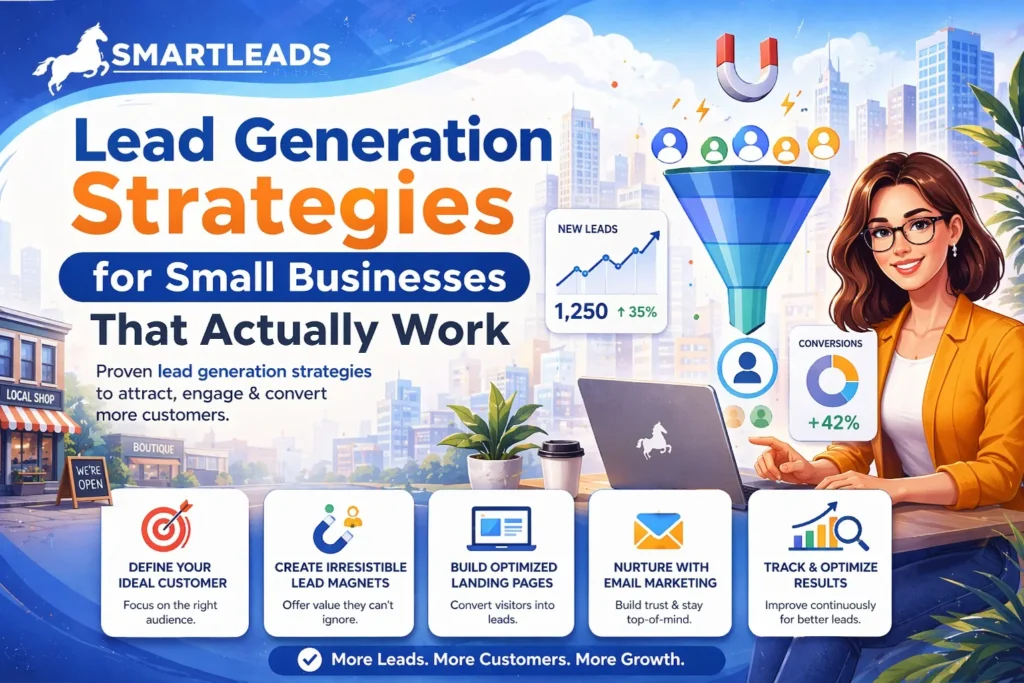
In today’s competitive digital landscape, generating consistent and high-quality leads is one of the biggest challenges for small businesses. Without a steady flow of potential customers, growth becomes difficult and unpredictable. This is where effective lead generation strategies play a crucial role.
Lead generation is not just about attracting visitors—it’s about converting the right audience into interested prospects who are likely to become paying customers. In this blog, we’ll explore proven strategies that actually work for small businesses and help drive sustainable growth.
Why Lead Generation is Important for Small Businesses
Small businesses often operate with limited resources, making it essential to focus on strategies that deliver measurable results.
Effective lead generation strategies help:
- Attract potential customers
- Build a strong sales pipeline
- Increase conversion opportunities
- Improve revenue growth
- Maximize marketing ROI
A consistent lead generation system ensures long-term business success.
Step 1: Build a High-Converting Website
Your website is the foundation of your lead generation efforts.
To generate leads effectively:
- Use clear and compelling messaging
- Add strong call-to-action (CTA) buttons
- Optimize for mobile devices
- Ensure fast loading speed
A well-designed website encourages visitors to take action, such as filling out a form or contacting your business.
Step 2: Leverage Search Engine Optimization (SEO)
SEO is one of the most effective long-term lead generation strategies.
By optimizing your website for search engines, you can:
- Rank for relevant keywords
- Attract organic traffic
- Generate high-intent leads
Creating valuable blog content and targeting long-tail keywords improves visibility and drives consistent traffic.
Step 3: Use Pay-Per-Click (PPC) Advertising
PPC advertising helps generate leads quickly.
Platforms like Google Ads and social media ads allow you to:
- Target specific audiences
- Control your budget
- Measure performance
Well-optimized campaigns can deliver high-quality leads within a short period.
Step 4: Create Valuable Content
Content marketing plays a key role in attracting and engaging potential customers.
Effective content includes:
- Blog posts
- Guides and ebooks
- Case studies
- Videos
Providing useful information builds trust and positions your business as an authority in your industry.
Step 5: Utilize Social Media Marketing
Social media platforms offer powerful opportunities for lead generation.
Businesses can:
- Share valuable content
- Engage with their audience
- Run targeted ad campaigns
- Promote offers and services
Consistent activity on social media increases visibility and attracts potential customers.
Step 6: Implement Email Marketing
Email marketing is one of the most cost-effective lead generation strategies.
Use email campaigns to:
- Nurture leads
- Share updates and offers
- Build long-term relationships
Automation tools help streamline communication and improve engagement.
Step 7: Use Lead Magnets
Lead magnets are incentives offered to capture user information.
Examples include:
- Free consultations
- Downloadable guides
- Discount offers
- Webinars
Providing value in exchange for contact details increases lead generation effectiveness.
Step 8: Optimize Landing Pages
Landing pages are designed specifically to convert visitors into leads.
Key elements include:
- Clear headline
- Focused messaging
- Minimal distractions
- Strong CTAs
Optimized landing pages improve conversion rates and reduce cost per lead.
Step 9: Leverage Retargeting Campaigns
Most users do not convert on their first visit.
Retargeting helps:
- Re-engage visitors
- Increase brand recall
- Improve conversion rates
This ensures that potential leads are not lost.
Step 10: Track and Improve Performance
Continuous optimization is essential for success.
Monitor key metrics such as:
- Conversion rate
- Cost per lead (CPL)
- Lead quality
- Engagement rates
Analyzing data helps refine your lead generation strategies and improve results over time.
Final Thoughts
Implementing effective lead generation strategies is essential for small businesses looking to grow and compete in today’s digital marketplace. By combining SEO, PPC, content marketing, social media, and email campaigns, businesses can create a powerful system for attracting and converting leads.
The key to success lies in consistency, optimization, and understanding your audience. Instead of relying on a single method, focus on building a multi-channel strategy that delivers long-term results and sustainable growth.
FAQs
- What are lead generation strategies?
Lead generation strategies are methods used to attract potential customers and convert them into leads through various marketing channels.
- Which lead generation strategy works best for small businesses?
A combination of SEO for long-term growth and PPC for quick results works best for most small businesses.
- How can I generate leads with a low budget?
You can use cost-effective methods like SEO, content marketing, social media, and email marketing to generate leads without a large budget.
- What is a lead magnet?
A lead magnet is an incentive offered to users, such as a free guide or consultation, in exchange for their contact information.
- How long does it take to see results from lead generation strategies?
Paid campaigns can generate leads quickly, while organic methods like SEO and content marketing may take a few months for consistent results.