
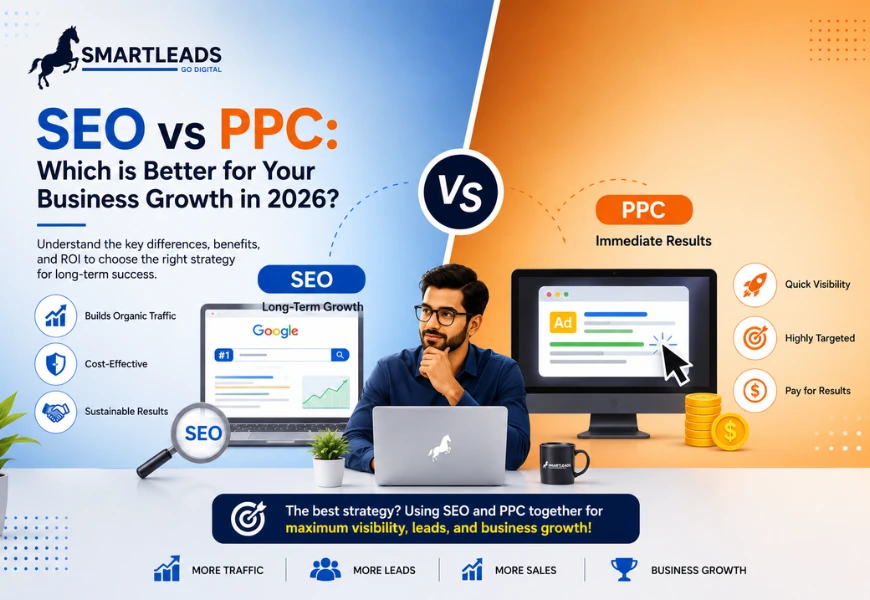
In the fast-changing digital marketing landscape, businesses are constantly looking for the best ways to generate traffic, leads, and sales. Two of the most powerful online marketing strategies are Search Engine Optimization (SEO) and Pay-Per-Click (PPC) advertising. But one common question businesses ask is: SEO vs PPC which is better for business growth in 2026?
The answer depends on your goals, budget, competition, and timeline. SEO focuses on long-term organic growth, while PPC delivers immediate visibility through paid advertising. Both strategies have unique advantages, and understanding how they work can help businesses make smarter marketing decisions.
In this blog, we’ll compare SEO and PPC in detail to help you choose the right strategy for your business growth in 2026.
What is SEO?
SEO (Search Engine Optimization) is the process of improving your website’s visibility on search engines like Google through organic methods.
SEO includes:
- Keyword optimization
- Content creation
- Technical SEO
- Link building
- Local SEO
The goal of SEO is to rank higher in search results and attract organic traffic without paying for each click.
What is PPC?
PPC (Pay-Per-Click) is a paid advertising model where businesses pay each time someone clicks on their ad.
Popular PPC platforms include:
- Google Ads
- Facebook Ads
- Instagram Ads
- LinkedIn Ads
PPC allows businesses to gain immediate visibility and target specific audiences based on demographics, interests, and search intent.
SEO vs PPC: Key Differences
1. Speed of Results
SEO
SEO is a long-term strategy. It usually takes several months to achieve noticeable rankings and traffic growth.
PPC
PPC delivers immediate results. Ads can start generating traffic and leads within hours of launching campaigns.
Best Choice:
- Choose SEO for sustainable long-term growth
- Choose PPC for quick lead generation
2. Cost and Investment
SEO
SEO requires an upfront investment in optimization, content creation, and technical improvements. However, organic traffic becomes cost-effective over time.
PPC
PPC requires continuous spending. Once the ad budget stops, traffic also stops.
Best Choice:
- SEO is more cost-effective long term
- PPC is ideal for short-term campaigns and promotions
3. Traffic Quality
SEO
Organic search traffic often has higher trust and credibility because users naturally click on search results.
PPC
PPC targets high-intent audiences directly, making it effective for conversions and immediate actions.
Best Choice:
Both strategies can deliver high-quality traffic when optimized correctly.
4. Brand Visibility and Trust
SEO
Ranking organically on Google improves brand credibility and trust among users.
PPC
Ads increase visibility instantly, but some users may prefer organic results over paid ads.
Best Choice:
SEO generally builds stronger long-term trust and authority.
5. Scalability
SEO
Scaling SEO takes time because rankings depend on competition and content authority.
PPC
PPC campaigns can scale quickly by increasing ad budgets and targeting new audiences.
Best Choice:
PPC offers faster scalability for businesses looking for rapid growth.
6. Long-Term ROI
SEO
SEO delivers long-term benefits because organic rankings continue generating traffic over time.
PPC
PPC provides measurable ROI quickly but requires ongoing investment.
Best Choice:
SEO typically delivers better long-term ROI.
When Should Businesses Choose SEO?
SEO is ideal if your business wants to:
- Build long-term online visibility
- Generate sustainable organic traffic
- Improve brand authority
- Reduce long-term customer acquisition costs
Businesses focused on long-term growth should prioritize SEO.
When Should Businesses Choose PPC?
PPC is ideal if your business wants to:
- Generate immediate leads
- Launch new products or services
- Target specific audiences quickly
- Run seasonal or promotional campaigns
Businesses needing quick results benefit greatly from PPC advertising.
Why Combining SEO and PPC Works Best
Instead of choosing one over the other, many successful businesses combine both strategies.
Benefits of combining SEO and PPC include:
- Immediate traffic from PPC
- Long-term growth from SEO
- Increased brand visibility
- Better keyword insights
- Higher overall conversions
A balanced strategy allows businesses to maximize traffic, leads, and ROI.
SEO and PPC Trends in 2026
In 2026, digital marketing is becoming more AI-driven and personalized.
Key trends include:
- AI-powered search optimization
- Voice search SEO
- Smart bidding strategies in PPC
- Personalized ad targeting
- Increased focus on user experience
Businesses that adapt to these trends will gain a competitive advantage.
Final Thoughts
When comparing SEO vs PPC which is better, the answer depends on your business goals and growth strategy. SEO is the best choice for sustainable long-term visibility and authority, while PPC is ideal for quick traffic and immediate lead generation.
For most businesses in 2026, the smartest approach is to combine both SEO and PPC. This creates a balanced strategy that delivers short-term results while building long-term growth. By leveraging the strengths of both channels, businesses can improve visibility, attract high-quality leads, and maximize return on investment.
FAQs
- What is the main difference between SEO and PPC?
SEO focuses on organic search rankings, while PPC involves paid advertisements that generate immediate traffic.
- Which is more cost-effective: SEO or PPC?
SEO is generally more cost-effective in the long term, while PPC requires continuous ad spending.
- How long does SEO take to show results?
SEO usually takes 3–6 months to show significant improvements, depending on competition and optimization efforts.
- Can SEO and PPC work together?
Yes, combining SEO and PPC creates a stronger digital marketing strategy by delivering both immediate and long-term results.
- Which strategy is better for small businesses?
Small businesses can benefit from both. SEO builds long-term visibility, while PPC helps generate leads quickly with targeted campaigns.