
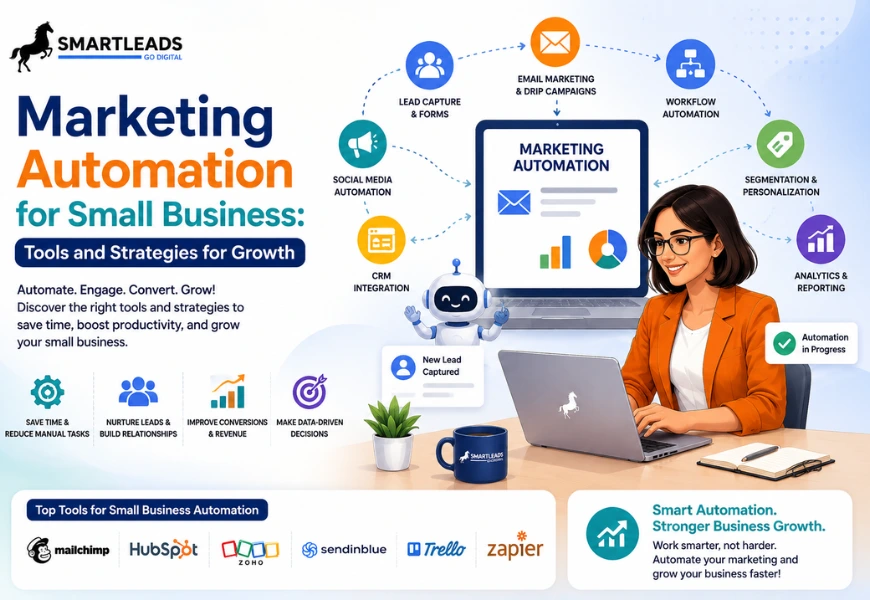
Running a small business involves managing multiple tasks, from customer communication and lead generation to sales follow-ups and marketing campaigns. As competition increases, manually handling every process becomes time-consuming and inefficient. This is where marketing automation for small business becomes a powerful solution for improving productivity and driving growth.
Marketing automation helps businesses streamline repetitive tasks, improve customer engagement, and generate more leads with less manual effort. From email campaigns and lead nurturing to social media scheduling and customer tracking, automation tools allow businesses to scale marketing efforts efficiently.
In this blog, we’ll explore how marketing automation works, the best strategies for small businesses, and the tools that can help accelerate growth.
What is Marketing Automation?
Marketing automation refers to using software and technology to automate repetitive marketing tasks and workflows.
This includes:
- Email marketing automation
- Lead nurturing
- Social media scheduling
- Customer segmentation
- Campaign tracking and reporting
Automation allows businesses to deliver personalized experiences while saving time and resources.
Why Marketing Automation is Important for Small Businesses
Small businesses often operate with limited teams and budgets.
Marketing automation for small business helps:
- Save time and improve efficiency
- Generate and nurture leads automatically
- Improve customer engagement
- Increase conversion rates
- Reduce manual workload
Automation helps small businesses compete more effectively without requiring large marketing teams.
1. Automate Email Marketing Campaigns
Email marketing is one of the most effective channels for customer communication.
Automation helps businesses:
- Send welcome emails
- Follow up with leads
- Share promotional offers
- Deliver personalized content
Automated email workflows improve consistency and customer engagement.
2. Use CRM Integration for Better Lead Management
Customer Relationship Management (CRM) systems help businesses organize and track leads.
CRM automation allows businesses to:
- Store customer information
- Track customer interactions
- Assign leads automatically
- Monitor sales pipelines
This improves lead management and sales efficiency.
3. Implement Lead Nurturing Workflows
Not every lead converts immediately.
Lead nurturing automation helps businesses:
- Stay connected with prospects
- Share relevant content
- Build trust over time
Automated workflows guide leads through the buying journey until they are ready to convert.
4. Schedule Social Media Content Automatically
Consistent social media activity is essential for brand visibility.
Social media automation tools help businesses:
- Schedule posts in advance
- Maintain posting consistency
- Track engagement metrics
This saves time and ensures a regular online presence.
5. Personalize Customer Experiences
Modern customers expect personalized communication.
Marketing automation enables businesses to:
- Segment audiences
- Send targeted offers
- Recommend relevant products or services
Personalization improves engagement and increases conversion rates.
6. Automate Customer Follow-Ups
Following up with leads manually can be difficult and inconsistent.
Automation tools help businesses:
- Send reminders and follow-up emails
- Re-engage inactive customers
- Maintain customer relationships
Timely follow-ups improve lead conversion opportunities.
7. Improve Lead Scoring and Qualification
Lead scoring helps businesses identify high-quality prospects.
Automation tools can score leads based on:
- Website activity
- Email engagement
- Purchase intent
This allows sales teams to focus on leads most likely to convert.
8. Use Chatbots for Instant Customer Support
AI-powered chatbots improve customer interaction and response time.
Chatbots can:
- Answer common questions
- Collect lead information
- Provide 24/7 assistance
This improves user experience and supports lead generation.
9. Track Campaign Performance and Analytics
Data analysis is crucial for marketing success.
Automation tools help monitor:
- Open rates
- Click-through rates
- Conversion rates
- Customer behavior
Analytics allow businesses to optimize campaigns for better results.
10. Best Marketing Automation Tools for Small Businesses
Several tools are available to help automate marketing tasks.
Popular options include:
- HubSpot
- Mailchimp
- ActiveCampaign
- Zoho CRM
- Buffer for social media scheduling
Choosing the right tool depends on your business size, goals, and budget.
11. Combine Automation with Human Interaction
While automation improves efficiency, human interaction remains important.
Businesses should:
- Personalize communication when possible
- Respond genuinely to customer inquiries
- Build authentic relationships
Automation works best when combined with a human-centered approach.
Final Thoughts
Marketing automation for small business is no longer a luxury—it is a necessity for businesses looking to grow efficiently in a competitive digital landscape. By automating repetitive tasks, nurturing leads, and personalizing customer experiences, businesses can save time, improve engagement, and increase conversions.
The key to successful automation lies in choosing the right tools, understanding customer behavior, and continuously optimizing workflows. Small businesses that embrace automation can scale their marketing efforts effectively while focusing more on growth and customer satisfaction.
FAQs
- What is marketing automation for small business?
Marketing automation involves using software tools to automate tasks like email marketing, lead nurturing, social media scheduling, and customer tracking.
- Why is marketing automation important for small businesses?
It helps save time, improve efficiency, increase lead generation, and enhance customer engagement without requiring a large team.
- Which marketing automation tool is best for small businesses?
Popular tools include HubSpot, Mailchimp, ActiveCampaign, Zoho CRM, and Buffer, depending on business needs and budget.
- Can marketing automation improve lead generation?
Yes, automation improves lead generation by nurturing prospects, personalizing communication, and automating follow-ups.
- Is marketing automation expensive for small businesses?
Many automation tools offer affordable plans for small businesses, making it accessible even for startups and growing companies.