
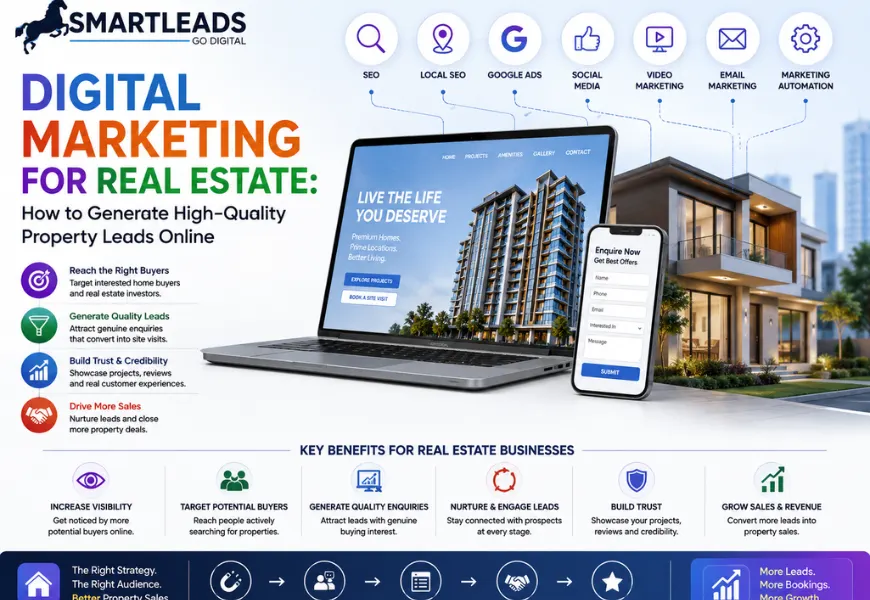
The real estate industry has changed significantly as buyers and investors increasingly use search engines, social media, property portals, videos, and online reviews to research properties before making a decision.
For real estate businesses, having a website is no longer enough. A well-planned digital marketing strategy for real estate can help developers, builders, brokers, agents, and property consultants reach the right audience, generate qualified enquiries, and nurture prospects throughout a longer buying journey.
The objective is not simply to generate more property leads. It is to generate high-quality leads from people who have genuine interest, suitable budgets, and realistic purchase intent.
What Is Digital Marketing for Real Estate?
Digital marketing for real estate involves using online channels to promote properties, attract prospective buyers or investors, generate enquiries, and build relationships with potential customers.
Common channels include:
- SEO
- Local SEO
- Google Ads
- Social media marketing
- Content marketing
- Video marketing
- Email marketing
- Property landing pages
- Marketing automation
- Retargeting
The right combination depends on the property type, location, target audience, price range, and sales cycle.
Why Is Digital Marketing Important for Real Estate?
Real estate purchases typically involve significant financial decisions. Buyers often research locations, developers, property prices, amenities, floor plans, financing options, and reviews before contacting a sales team.
Digital marketing allows real estate businesses to reach prospects during these different research stages.
An effective strategy can help:
- Increase property visibility
- Generate website traffic
- Promote new projects
- Capture property enquiries
- Build trust
- Retarget interested prospects
- Improve lead quality
- Support sales teams with better-qualified enquiries
1. Build a High-Converting Real Estate Website
Your website is the foundation of your digital marketing strategy.
Every important property or project should have a dedicated page containing useful information such as:
- Project location
- Property types
- Price information where appropriate
- Floor plans
- Amenities
- Project specifications
- Images and videos
- Location advantages
- FAQs
- Developer information
- Contact options
Make it easy for visitors to request a brochure, schedule a site visit, enquire about availability, or contact the sales team.
2. Invest in Real Estate SEO
SEO helps properties appear when potential buyers search online.
Target relevant keywords based on:
- Property type
- Location
- Buyer intent
- Price range
- Project name
- Amenities
- Investment intent
Examples include searches such as “apartments for sale in Chennai,” “2 BHK flats in Chennai,” or “new residential projects in Chennai.”
Create useful content around these topics rather than relying only on property listings.
3. Strengthen Local SEO
Real estate is strongly connected to location, making local SEO especially important.
Optimize your Google Business Profile and relevant local pages. Create useful content about neighbourhoods, connectivity, schools, transport, amenities, infrastructure, and lifestyle.
Location-based content can help potential buyers understand not only the property but also the area surrounding it.
4. Use Google Ads to Capture High-Intent Buyers
Google Ads can help real estate businesses reach people actively searching for properties.
Create separate campaigns based on:
- Location
- Property type
- Project
- Buyer intent
- Search terms
Avoid sending every advertisement to the homepage. Use dedicated landing pages that match the search query and property being promoted.
Track enquiries, calls, brochure downloads, and site-visit bookings rather than measuring clicks alone.
5. Use Social Media to Showcase Properties
Real estate is highly visual, making platforms such as Instagram, Facebook, YouTube, and LinkedIn useful for showcasing properties and building brand awareness.
Content can include:
- Property walkthroughs
- Virtual tours
- Project updates
- Amenities
- Construction progress
- Neighbourhood guides
- Customer testimonials
- Frequently asked questions
- Short educational videos
High-quality visual content can help potential buyers understand the property before contacting the sales team.
6. Create Helpful Real Estate Content
Many property buyers have questions long before they are ready to make an enquiry.
Create content around questions such as:
- How much does it cost to buy a flat in Chennai?
- What should I check before buying a new apartment?
- Is buying a property under construction a good idea?
- What documents should I verify before buying a property?
- Which location is better for property investment?
This type of content can attract users during the research stage and gradually introduce them to your properties.
7. Use AEO for Property Search Queries
Answer Engine Optimization can complement traditional real estate SEO.
Potential buyers increasingly use conversational searches such as:
“What are the best areas to buy an apartment in Chennai?”
“What should I look for when buying a new flat?”
“How much should I budget for a 2 BHK apartment?”
Create clear, trustworthy answers to these questions using descriptive headings, concise explanations, FAQs, supporting information, and structured content.
AEO-focused content can help your brand become more discoverable across modern search and AI-powered answer experiences.
8. Use Lead Magnets
Real estate businesses can use valuable resources to capture prospect information.
Examples include:
- Property brochures
- Price guides
- Locality guides
- Investment checklists
- Home-buying guides
- Floor plans
- Project comparison guides
- Site-visit booking forms
The resource should provide genuine value and make sense for the prospect’s stage in the buying journey.
9. Nurture Leads With Marketing Automation
Not every property enquiry results in an immediate site visit or purchase.
Marketing automation can help businesses follow up with prospects through:
- SMS or other permitted messaging channels
- Property updates
- New inventory alerts
- Appointment reminders
- Educational content
Segment leads based on their interests, location preferences, property type, and buying stage to make follow-up more relevant.
10. Retarget Interested Visitors
Many property buyers visit a website several times before contacting a sales team.
Retargeting can help businesses reconnect with users who previously interacted with relevant pages or campaigns, subject to applicable platform rules and privacy requirements.
Instead of showing the same advertisement repeatedly, use relevant messaging based on the prospect’s previous interaction.
11. Build Trust Through Reviews and Testimonials
Buying property involves significant financial commitment, so trust matters.
Showcase genuine:
- Customer testimonials
- Project reviews
- Developer experience
- Completed projects
- Awards or certifications where applicable
- Case studies
- Construction updates
Avoid exaggerated claims. Accurate and transparent information can help potential buyers make more confident decisions.
12. Measure Lead Quality, Not Just Lead Volume
A real estate campaign generating hundreds of enquiries is not necessarily successful if most leads are irrelevant.
Track:
- Cost per lead
- Qualified leads
- Site-visit bookings
- Site-visit attendance
- Lead-to-booking rate
- Customer acquisition cost
- Revenue generated
- Campaign-level conversion rates
Connect marketing data with CRM and sales information wherever possible. This helps identify which channels produce actual property buyers.
Final Thoughts
Digital marketing for real estate is not simply about advertising properties online. It is about reaching potential buyers at different stages of their decision-making journey and giving them the information they need to move forward.
A strong strategy combines SEO, AEO, Google Ads, social media, content, video, local search, marketing automation, and conversion optimization.
Most importantly, measure what happens after the lead is generated. Track qualified enquiries, site visits, bookings, sales, customer acquisition cost, and revenue rather than focusing only on impressions or clicks.
When digital marketing is connected closely with the sales process, real estate businesses can build a more predictable pipeline of high-quality property leads and create sustainable online growth.
FAQs
1. What is the best digital marketing strategy for real estate?
A combination of SEO, Google Ads, local SEO, social media, property landing pages, video marketing, content marketing, lead nurturing, and retargeting can be effective. The right mix depends on the property, location, audience, and sales objectives.
2. How can real estate companies generate high-quality leads online?
Focus on high-intent keywords, targeted Google Ads, optimized property pages, useful content, clear lead forms, accurate audience targeting, and proper lead qualification. Measuring site visits and sales outcomes is also important.
3. Is SEO useful for real estate businesses?
Yes. Real estate SEO can help businesses attract people searching for properties, locations, investment information, and home-buying advice. It can support long-term organic visibility when implemented consistently.
4. Are Google Ads effective for property leads?
Google Ads can be effective for capturing high-intent searches. Performance depends on keyword selection, location targeting, advertising budget, landing-page quality, competition, and lead follow-up.
5. How can real estate businesses improve lead quality?
Define the ideal buyer, target relevant search intent, provide accurate property information, use qualifying questions on enquiry forms, segment leads, and connect marketing campaigns with CRM and sales data.