
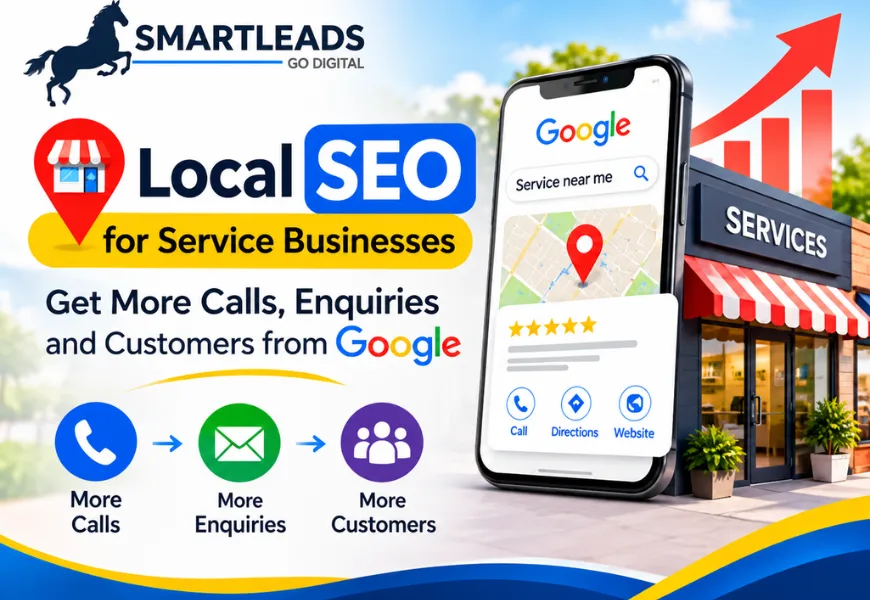
Local SEO for service businesses is the process of improving a company’s online visibility in location-based Google searches. It helps businesses connect with potential customers who are searching for nearby services, such as plumbers, electricians, consultants, digital marketing agencies, clinics and home repair professionals.
When someone searches for a service along with a location, Google may display relevant local businesses through Google Maps, local search results and organic website listings. Appearing in these results can help businesses attract more phone calls, website visits, enquiries and customers.
However, ranking locally requires more than creating a website or adding a business address. Businesses need an accurate Google Business Profile, location-focused website content, genuine customer reviews and consistent business information across the internet.
Here are practical Local SEO strategies service businesses can use to improve their Google visibility and generate more local enquiries.
1. Optimise Your Google Business Profile
A Google Business Profile is one of the most important tools for improving local search visibility. It allows businesses to display essential information directly on Google Search and Maps.
To optimise your profile:
- Use your correct business name.
- Select the most relevant primary and secondary categories.
- Add an accurate address or service area.
- Include your phone number and website.
- Update business hours and holiday timings.
- Add genuine photos of your business, team and services.
- Write a clear business description.
Choose categories that accurately represent your main services. For example, a company offering plumbing services should select the most relevant plumbing category rather than an unrelated business category.
Keep your profile updated so potential customers can easily understand what you offer and how to contact you.
2. Target Location-Based Keywords
Local keyword research helps businesses understand how potential customers search for services in specific areas.
Instead of targeting only broad keywords such as “digital marketing agency”, use relevant location-based phrases such as:
- Digital marketing agency in Chennai
- Plumbing services in Tambaram
- Electrician near Velachery
- Website development company in Chennai
- Pest control services in Pallavaram
Include relevant location keywords naturally in page titles, headings, service descriptions and website content.
Avoid repeating city and neighbourhood names unnecessarily. Your content should remain useful and readable while clearly communicating the locations you serve.
3. Create Dedicated Service and Location Pages
If your business provides multiple services or operates across different locations, dedicated website pages can help Google and potential customers understand your offerings.
For example, a home services company could create separate pages for plumbing, electrical repairs and air-conditioning maintenance.
A business serving multiple areas may also create location-specific pages when each page provides genuinely useful local information.
Each page should include:
- A clear service and location-focused heading.
- Detailed information about the service.
- Areas covered by the business.
- Relevant customer questions and answers.
- Genuine testimonials or project examples.
- A clear call to action.
Avoid creating dozens of nearly identical location pages with only the city name changed. Each page should offer meaningful information for people in that area.
4. Maintain Consistent Business Information
Your business name, address and phone number should be accurate and consistent across important online platforms.
These details are commonly referred to as NAP information: Name, Address and Phone number.
Check your information across:
- Google Business Profile.
- Your official website.
- Relevant business directories.
- Social media profiles.
- Industry-specific listing websites.
Incorrect phone numbers, outdated addresses and inconsistent business details can confuse potential customers. Review important listings regularly and update them whenever business information changes.
5. Collect Genuine Customer Reviews
Customer reviews help people evaluate a service business before contacting it. They also contribute to the prominence and reputation signals considered in local search.
Encourage satisfied customers to share honest feedback through your Google Business Profile.
You can:
- Send customers a direct review link after completing a service.
- Request feedback through follow-up emails or messages.
- Respond professionally to positive and negative reviews.
- Address genuine complaints and explain how issues are resolved.
Never purchase fake reviews or offer incentives in exchange for positive ratings. Focus on delivering good service and making it easy for genuine customers to share their experiences.
6. Optimise Your Website for Mobile Searches
Many people search for local services using smartphones, particularly when they need immediate assistance.
Your website should make it easy for mobile visitors to contact your business.
Important improvements include:
- Use a responsive website design.
- Display your phone number clearly.
- Add click-to-call functionality.
- Keep enquiry forms short and simple.
- Make service information easy to find.
- Ensure buttons are easy to tap.
- Improve page loading speed.
A mobile-friendly website reduces friction and helps potential customers move from searching for a service to contacting your business.
7. Publish Helpful Local Content
Useful website content can help service businesses answer customer questions and attract relevant local searches.
Create blogs and guides around common problems, service requirements and location-specific topics.
For example:
- How to Choose a Reliable Electrician in Chennai
- Common Plumbing Problems Homeowners Should Not Ignore
- How Much Does Website Development Cost for Small Businesses?
- When Should You Schedule Air-Conditioning Maintenance?
Include clear answers, practical advice and relevant service information. This approach supports both traditional SEO and Answer Engine Optimization (AEO), helping search engines and AI-powered platforms understand your expertise.
8. Build Relevant Local Links
Local backlinks are links from relevant external websites that point to your business website. They can help strengthen your online authority and improve discoverability.
Look for legitimate opportunities through:
- Local business associations.
- Relevant industry directories.
- Community organisations.
- Local publications and news websites.
- Genuine business partnerships.
- Professional associations.
Prioritise relevant, trustworthy websites rather than purchasing large numbers of low-quality links. The goal is to build a credible online presence within your industry and service locations.
9. Track Local SEO Performance
Local SEO requires regular measurement to understand which strategies are producing results.
Use Google Search Console, Google Analytics 4 and Google Business Profile performance data to monitor relevant activity.
Track metrics such as:
| Metric | What it tells you |
| Local search visibility | How often your business appears in relevant searches |
| Website clicks | Visitors coming from search results |
| Phone calls | Potential customers contacting your business |
| Direction requests | Users looking for your business location |
| Enquiry submissions | Leads generated through your website |
| Qualified leads | Enquiries with genuine business potential |
Review these metrics regularly and identify which services, pages and locations generate the most valuable enquiries.
FAQs
1. What is Local SEO for service businesses?
Local SEO is the process of improving a business’s visibility in location-based search results on Google. It helps service providers attract nearby customers searching for relevant products or services.
2. How can a service business rank higher on Google Maps?
Optimise your Google Business Profile, select accurate categories, maintain updated business information, collect genuine customer reviews and build a relevant local online presence. Google considers relevance, distance and prominence when determining local results, so rankings cannot be guaranteed.
3. Is a Google Business Profile important for Local SEO?
Yes. A Google Business Profile helps businesses manage how their information appears on Google Search and Maps. It allows customers to find contact details, opening hours, reviews, photos and other useful information.
4. How long does Local SEO take to show results?
The timeline depends on competition, location, website quality, business reputation and the work required. Some improvements may become visible earlier, while building consistent local visibility generally requires ongoing optimisation.
5. Can a service business use Local SEO without a physical shop?
Yes. Service-area businesses that travel to customers can use a Google Business Profile with appropriate service-area settings, subject to Google’s eligibility and guidelines. They should provide accurate business information without displaying an address where customers are not served.
Final Thoughts
Local SEO for service businesses helps turn online searches into real business opportunities. By improving your Google Business Profile, targeting relevant location keywords, creating useful service pages, collecting genuine reviews and maintaining accurate business information, you can strengthen your local search presence.
However, Local SEO is not a one-time activity. Regular content updates, website improvements, review management and performance tracking are essential for maintaining visibility and attracting relevant customers.
Smart Leads Digital helps businesses improve their online visibility through SEO, Local SEO, AEO, website optimisation and digital marketing strategies. With a well-planned local search strategy, service businesses can reach more potential customers, generate quality enquiries and build sustainable growth.