
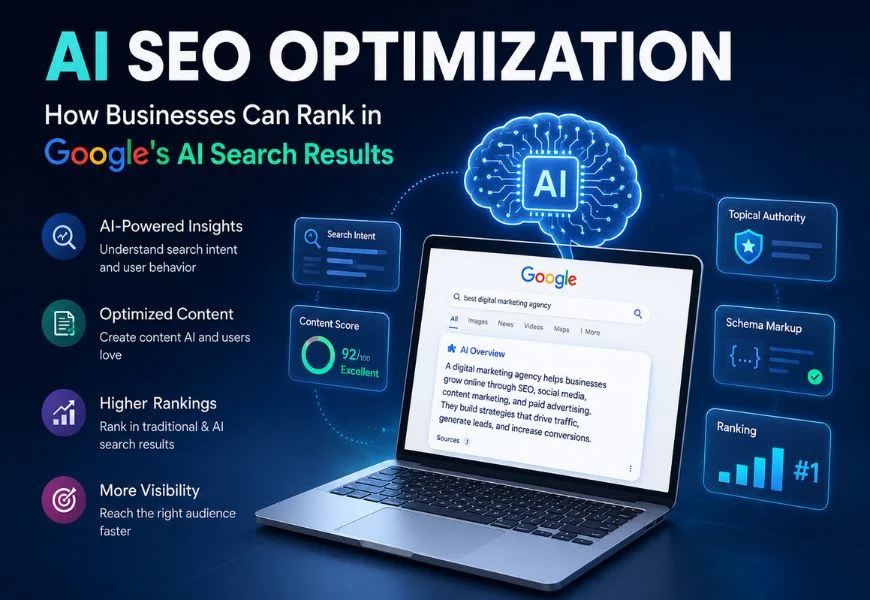
As search engines evolve, traditional SEO is no longer enough to secure online visibility. With the rise of AI-powered search experiences such as Google’s AI Overviews, businesses must adapt their digital strategies to remain competitive. This is where AI SEO optimization becomes essential.
AI SEO optimization focuses on creating content and website experiences that help search engines and AI-powered answer engines understand, evaluate, and recommend your content to users. By combining SEO best practices with Answer Engine Optimization (AEO), businesses can improve their chances of appearing in AI-generated search results and gaining more qualified traffic.
What Is AI SEO Optimization?
AI SEO optimization is the process of optimizing your website and content for both traditional search engine rankings and AI-driven search experiences. Instead of focusing solely on keywords, AI SEO emphasizes:
- User intent
- Content quality and relevance
- Structured data
- Topic authority
- Conversational content
- Clear answers to user questions
Google’s AI-powered search features analyze vast amounts of information and present concise answers directly to users. Businesses that provide trustworthy, well-structured, and comprehensive content are more likely to be featured.
Why AI SEO Optimization Matters
The way people search online is changing. Users increasingly ask complete questions rather than typing short keyword phrases. For example:
Instead of searching:
- “SEO services”
Users now search:
- “What are the best SEO services for small businesses?”
- “How can AI improve SEO performance?”
AI search systems prioritize content that directly answers these questions.
Benefits of AI SEO optimization include:
- Increased visibility in AI-generated search results
- Higher organic traffic
- Better user engagement
- Improved brand authority
- More qualified leads and conversions
Businesses that adapt early can gain a significant advantage over competitors who rely only on traditional SEO methods.
How Google’s AI Search Results Work
Google’s AI-powered search experience gathers information from multiple trusted sources to generate summarized answers. The system looks for content that demonstrates:
Relevance
Your content must match the user’s search intent.
Expertise
Content should be accurate, detailed, and created by knowledgeable sources.
Authority
Websites with strong topical authority are more likely to be referenced.
Trustworthiness
Google prioritizes reliable information supported by credible sources and evidence.
To appear in AI search results, businesses must optimize content around these principles.
Best Practices for AI SEO Optimization
1. Create Content That Answers Specific Questions
AI systems prefer content that directly addresses user queries.
Instead of generic content, focus on answering questions such as:
- What is AI SEO optimization?
- How does AI affect search rankings?
- Why is AEO important for businesses?
Include concise answers near the beginning of your content and provide detailed explanations throughout the article.
2. Focus on Search Intent
Understanding user intent is more important than targeting keywords alone.
The main search intents include:
- Informational
- Navigational
- Commercial
- Transactional
Create content that aligns with what users actually want to know or achieve.
3. Use Structured Data
Structured data helps search engines understand your content more effectively.
Important schema types include:
- FAQ Schema
- Article Schema
- Organization Schema
- Local Business Schema
- Product Schema
Schema markup increases the chances of appearing in rich results and AI-generated responses.
4. Build Topical Authority
Publishing a single article is no longer enough.
Businesses should create clusters of related content around core topics.
For example, if your primary topic is AI SEO optimization, supporting articles could include:
- AI SEO tools
- AEO strategies
- AI content optimization
- Future of search marketing
- Google’s AI Overviews
This signals expertise and strengthens your authority within the niche.
5. Optimize for Conversational Search
Voice search and AI assistants encourage conversational queries.
Use natural language throughout your content.
Instead of writing:
“Best SEO services Chennai”
Write:
“What are the best SEO services available for businesses in Chennai?”
This approach aligns with how users interact with AI-powered search systems.
6. Improve Content Readability
AI systems favor content that is easy to understand.
Best practices include:
- Short paragraphs
- Clear headings
- Bullet points
- Simple language
- Logical content structure
Readable content improves both user experience and AI comprehension.
7. Strengthen E-E-A-T Signals
Google evaluates content based on Experience, Expertise, Authoritativeness, and Trustworthiness (E-E-A-T).
To strengthen these signals:
- Include author information
- Showcase industry expertise
- Add case studies
- Use credible references
- Keep content updated
Trustworthy websites are more likely to be selected for AI-generated answers.
Common Mistakes to Avoid
Many businesses struggle to appear in AI search results because they:
- Focus only on keywords
- Publish thin or low-quality content
- Ignore user intent
- Neglect schema markup
- Fail to update outdated content
- Create content without a clear structure
Avoiding these mistakes can significantly improve visibility in both traditional and AI-powered search results.
The Future of AI SEO
AI will continue to transform how users discover information online. Search engines are becoming more focused on understanding context, intent, and content quality rather than simple keyword matching.
Businesses that embrace AI SEO optimization today will be better positioned to:
- Increase organic visibility
- Attract targeted traffic
- Build brand authority
- Generate more leads
- Stay ahead of evolving search trends
The future belongs to websites that provide valuable, trustworthy, and user-focused content.
Final Thoughts
AI-powered search is reshaping the digital marketing landscape, making AI SEO optimization a critical strategy for businesses that want to remain visible online. Ranking in Google’s AI search results requires more than keyword optimization—it demands high-quality content, clear answers, structured data, topical authority, and a strong focus on user intent.
By combining SEO and Answer Engine Optimization (AEO) strategies, businesses can improve their chances of being featured in AI-generated responses, attract more qualified visitors, and establish long-term authority in their industry. As search continues to evolve, investing in AI SEO optimization today can help your business stay ahead of competitors and achieve sustainable organic growth.
FAQs
- What is AI SEO optimization?
AI SEO optimization is the process of improving website content and structure to perform well in both traditional search rankings and AI-powered search experiences such as Google’s AI Overviews.
- How is AI SEO different from traditional SEO?
Traditional SEO focuses heavily on keywords and rankings, while AI SEO emphasizes user intent, content quality, authority, structured data, and conversational search optimization.
- Can AI-generated content rank on Google?
Yes, AI-generated content can rank if it is accurate, valuable, original, and meets Google’s quality guidelines. Human review and expertise remain important.
- What role does schema markup play in AI SEO?
Schema markup helps search engines understand website content, increasing the likelihood of appearing in rich snippets and AI-generated search responses.
- How can businesses prepare for AI-powered search?
Businesses should focus on creating helpful content, answering user questions, building topical authority, implementing structured data, and optimizing for conversational search.